Table of Contents
- Driving in Japan: What Nobody Tells You
- Into the Northern Alps: Hakuba
- Kamikochi: The Valley That Took Our Breath Away
- Matsumoto Castle: Black Walls and Steep Stairs
- The Nakasendo Trail: Walking Where Samurai Walked
- South to Izu: Waterfalls, Wasabi, and a Heart-Shaped Cave
- The Coast: Ryugu Sea Cave and a Perfect Beach Day
- What We Learned About Van Life in Japan
- Practical Tips for Your Own Japan Campervan Trip
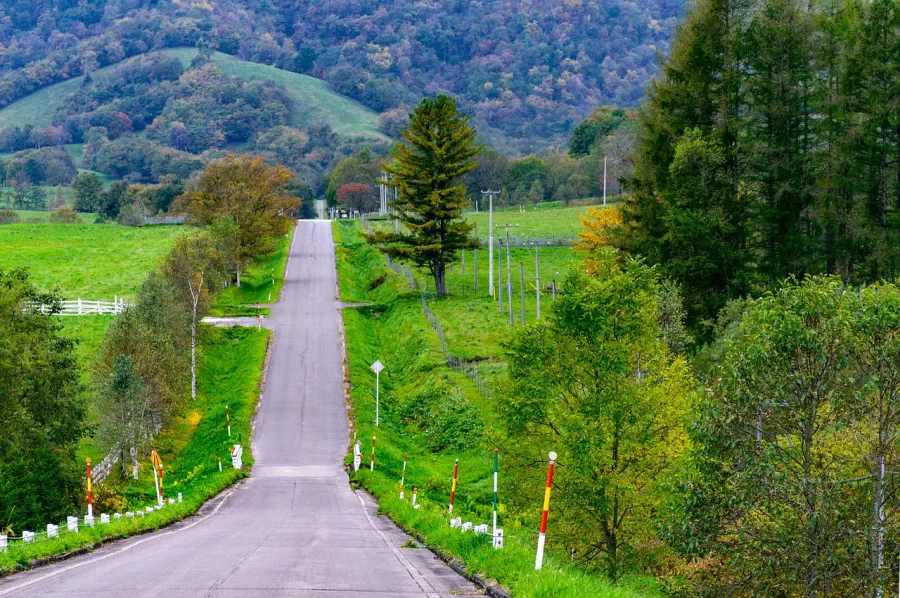
Japan’s campervan travel is a unique way to explore the country, combining van life with onsens (hot springs), Michi-no-Eki (roadside stations), and adventures through the Japanese Alps, ancient Nakasendo post towns, and the Izu Peninsula coast. There is something absurdly charming about tackling Japan’s mountain roads in a vehicle barely bigger than a shopping trolley. Our home for the next two weeks was a kei-class campervan — a white, boxy little thing with a pop-up roof and a kitchen squeezed into what felt like the footprint of a walk-in closet. We picked it up from Japan CRC in Tokyo, and within twenty minutes of merging onto the expressway, we were hooked. Van life in Japan hits different.
The plan was simple in outline and chaotic in execution: drive north into the Japanese Alps, hike what we could, wander through post towns frozen in the Edo period, then swing south to the Izu Peninsula for waterfalls, sea caves, and whatever else the coast threw at us. Six days, one tiny van, and a whole lot of mountain air.
The full journey is captured in the video below by Adam and Kathryn of Adventures of A+K, who spent two weeks exploring Japan in a mini campervan — and inspired this article.
Driving in Japan: What Nobody Tells You
Before we get into the scenery, a quick word on logistics — because driving in Japan as a foreigner comes with a learning curve.
You drive on the left. Sounds obvious until you’re navigating a narrow mountain lane at dusk while a kei truck bears down on you from the opposite direction. The rule is absolute: stick to the left, and when in doubt, slow down. Japan’s speed limits are conservative — 50 to 60 km/h in towns, rarely above 80 on expressways — so you’re rarely going fast enough for things to go truly wrong.
The toll system took some getting used to. We rented an ETC card with the van, which slots into a reader on the dashboard and lets you blow through toll gates without stopping. Expressway costs add up fast, though. A single stretch from Tokyo toward Nagano set us back around ¥4,000. If you’re planning serious mileage, look into regional expressway passes for foreign visitors — they exist for several areas and can save you a small fortune.
The best discovery? Michi-no-eki, Japan’s network of roadside stations. These government-run rest stops are everywhere — clean toilets, vending machines, local produce markets, and often free parking big enough for a campervan. We slept at three different ones over the course of the trip. No hookups, no fuss, just pull in, turn off the engine, and wake up to mountain views and the smell of fresh soy milk from the morning market. The Japanese word for it is “resting,” and that’s exactly what it feels like.
Into the Northern Alps: Hakuba
The drive from Tokyo to Hakuba takes about four hours if you take the expressway, longer if you keep getting distracted by mountain scenery (we did). The valley sits at the foot of the Northern Japanese Alps, and in early October, the larch trees were just starting to turn — patches of gold scattered across slopes still mostly green.
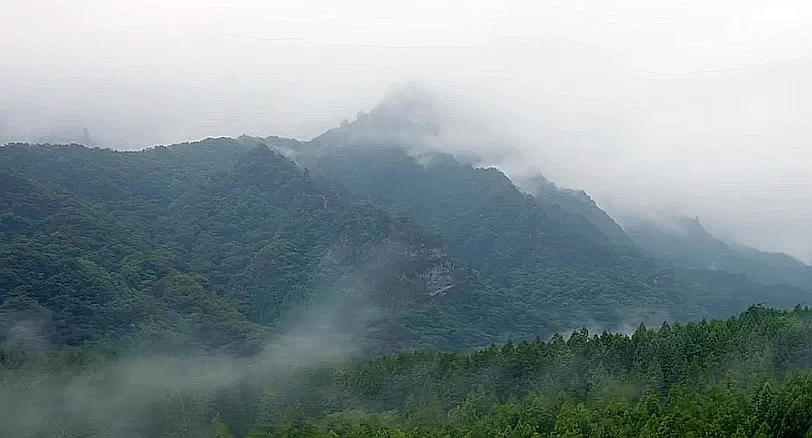
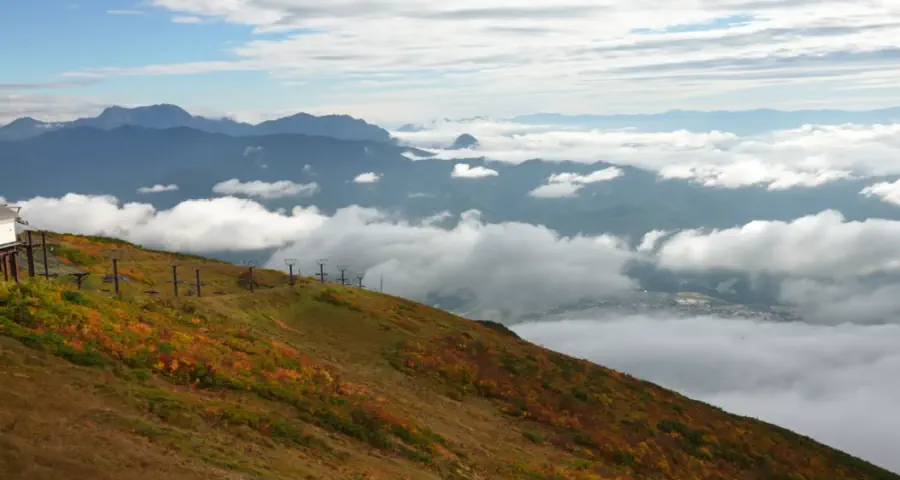
Our first hike was the trail to Happo-ike Pond, accessed via the Happo Alpenline gondola and chairlift system. The lift carries you to 1,830 metres in about fifteen minutes, and from there it’s a ninety-minute walk along a wooden boardwalk through karamatsu — Japanese larch — forest. When we reached the pond, the clouds parted just enough to reveal the Hakuba Sanzan: Mounts Shirouma, Shakushi, and Yari reflected in the still water. The reflection lasted about four minutes before the mist rolled back in, but those four minutes were spectacular.
More ambitious hikers can push on from the pond to the summit of Mt. Karamatsu at 2,696 metres — a further two and a half hours each way over rocky ridgelines with fixed chains. We saved that for another trip. The round trip to the pond and back took us about three hours at a comfortable pace, and the Alpenline operates from early June through early November (¥3,400 round trip for adults).
If the weather cooperates, the Happo-ike trail in mid-October is genuinely one of the best autumn colour hikes in Japan. The karamatsu lining the route go brilliant gold, and against the backdrop of snow-dusted peaks, it looks like someone turned up the saturation on reality.
Kamikochi: The Valley That Took Our Breath Away
An early wake-up got us to Kamikochi by bus before the crowds arrived. Private vehicles can’t enter the valley — you park at Sawando or Hirayu and transfer — which keeps the place feeling remarkably unspoiled for somewhere this beautiful.
Kamikochi is a 15-kilometre glacial valley at about 1,500 metres elevation, carved by the Azusa River at the base of the Hotaka range. The water runs a shade of blue-green that shifts with the light — sometimes turquoise, sometimes jade, sometimes something in between that doesn’t have a proper name.
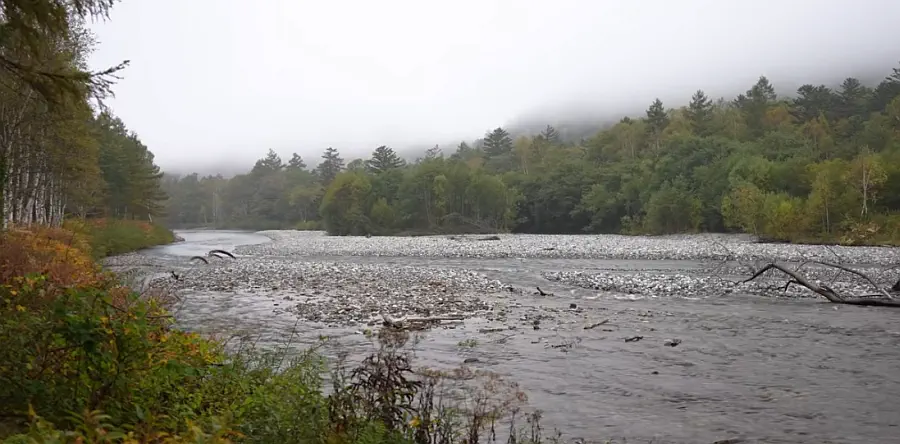
We walked from Taisho Pond to Kappa Bridge, a flat riverside trail of about four kilometres that takes an hour at a dawdling pace. The path follows the Azusa River through larch and birch forest, crossing wooden boardwalks over marshy clearings where cotton-grass sways in the breeze. Taisho Pond itself was formed by a volcanic eruption of Mount Yake, and on calm mornings the Hotaka peaks reflect perfectly in its surface.
By the time we reached Kappa Bridge, the clouds had lifted completely, revealing the full sweep of the Hotaka range against a deep blue sky. The bridge — a suspension structure straddling the rushing Azusa — is the valley’s most photographed spot, and standing there with the mountains towering above and the river roaring below, you understand why.
Matsumoto Castle: Black Walls and Steep Stairs
A detour to Matsumoto brought us face to face with one of Japan’s most iconic buildings. Matsumoto Castle is a National Treasure — one of only twelve surviving original castle keeps in the country — and its black-lacquered exterior against the backdrop of the Northern Alps is a sight that stops you in your tracks.
Built in the late 16th century, the castle sits on flat ground rather than a hilltop, protected by a system of moats and walls. The interior is not for the faint-hearted: roughly 140 steps climb at angles up to 61 degrees through six floors of dark timber, with windows designed for dropping stones on invaders rather than admiring the view. The sixth floor, though, rewards you with a panorama of the city and the Alps beyond.
We spent about an hour inside the keep, then wandered the Honmaru Garden where performers in samurai and ninja costumes roam the grounds. Admission is ¥700 for adults, and e-tickets are available online if you want to skip the queue.
Before leaving town, we found Sanzoku-yaki at a local restaurant — Matsumoto’s signature fried chicken, marinated in soy, ginger, and garlic, then deep-fried until the skin crackles. It comes piled on a wooden board with raw cabbage and a wedge of lemon. We ate it on a bench outside the castle walls while the afternoon light turned the Alps pink. Sometimes the simplest meals are the ones that stick.
The Nakasendo Trail: Walking Where Samurai Walked
This was the stretch we’d been looking forward to most. The Nakasendo was one of five great highways connecting Edo (Tokyo) and Kyoto during the Edo period — a 540-kilometre route over the spine of central Honshu, with 69 post towns where travellers rested, swapped horses, and slept. Most of the original trail has been paved over or absorbed by modern roads, but the section between Magome and Tsumago in the Kiso Valley remains almost exactly as it was three hundred years ago.
The walk is 8 kilometres one way, takes about three hours at a comfortable pace, and crosses Magome-toge pass at 801 metres. We started in Magome — the direction recommended by every guidebook and every local we asked — because you climb 200 metres to the pass and then descend 350 metres into Tsumago. Easier on the knees.
Magome itself is a post town built along a steep mountain ridge, its cobblestone main street climbing sharply past wooden machiya, watermills, and souvenir shops. We filled up on dango and rice crackers before hitting the trail.
The first section winds through cedar groves and quiet farmhouses, climbing steadily to the pass. At the top, a stone monument bears a haiku by Masaoka Shiki, one of Japan’s great haiku masters. On a clear day, you can see back toward Mount Ena.
From the pass, the trail descends through some of the most atmospheric forest we walked anywhere in Japan. About a kilometre down, we stopped at the Tateba Chaya — a reconstructed Edo-era rest house where volunteer staff serve thin green tea and pickled radish for a small donation. The irori hearth was crackling, and the silence of the forest pressed in from all sides.
Further along, a signpost marks the turnoff for Odaki and Medaki — the Male and Female Falls — a 200-metre detour off the main trail. The water crashes over mossy rocks into a pool so clear you can count the stones at the bottom. In October, the spray felt cool on our faces after three hours of walking.
The last kilometre into Tsumago descends steeply on stone steps, crosses a wooden bridge over a clear stream, and deposits you at the top of the town’s main street. Tsumago is, frankly, magical. Cars are banned during daylight hours. There are no vending machines along the street. Power lines are buried. The wooden buildings with their dark timber facades and paper lanterns look exactly as they might have looked when samurai walked this road. It feels less like a tourist attraction and more like a place that simply refused to move on.
South to Izu: Waterfalls, Wasabi, and a Heart-Shaped Cave
The drive from the Kiso Valley to the Izu Peninsula took most of a day, dropping from the mountains through the expressway network and south toward the Pacific coast. The landscape shifted from alpine forest to subtropical green, and the air warmed noticeably as we descended.
Our first stop was Joren Falls, one of the Izu Peninsula’s most celebrated waterfalls. Twenty-five metres of basalt cliff pour water into a pool surrounded by deep forest. The falls were formed about 17,000 years ago when Mount Hachikubo erupted and lava cascaded down the Kano River valley. Joren ferns grow wild in the spray zone — they give the waterfall its name — and the whole setting has a primordial quality that photographs struggle to capture.
Nearby, we discovered the Kawazu Seven Waterfalls — seven cascades of varying sizes along the Hontani River, connected by a walking trail through dense forest. The largest, Odaru, drops thirty metres over volcanic rock. The trail runs about 1.3 kilometres one way, and at the end you’ll find Nanadaru Onsen, where you can soak in outdoor hot spring baths with a view of the biggest waterfall. Entry to the falls is free; the onsen charges around ¥1,000.
And then there was the wasabi. The Izu Peninsula is Japan’s wasabi heartland, and the local restaurants lean into it hard. We tried wasabi ice cream at a roadside stand near the Seven Waterfalls — creamy, pale green, with a slow-building heat that catches in the back of your throat. It shouldn’t work, but it does. We went back for seconds.
The Kawazu Nanadaru Loop Bridge deserves a mention. It’s a double-spiral bridge on Route 414, engineered to gain elevation in a tight valley. Driving up through the loop, looking down at the road you were just on, feels like something out of an Escher print. Pull into the parking lot beneath it for a photo — the scale of the structure against the forested valley is genuinely impressive.
The Coast: Ryugu Sea Cave and a Perfect Beach Day
The southern tip of Izu delivered the trip’s most unexpected surprise. Ryugu Sea Cave — or Ryugukutsu, “Dragon Palace Cave” — is a sea-eroded cavern where the ceiling has collapsed to form a skylight roughly fifty metres across. From below, you stand inside the cave looking up at a circle of sky framed by yellow-brown volcanic strata. From above, on the promenade that circles the rim, the opening is unmistakably heart-shaped.
The cave was formed by waves eroding softer layers of rock deposited by ancient underwater volcanoes — the same geological process that shaped the entire southern Izu coastline. The strata inside glow amber in the sunlight, contrasting with the cobalt blue of the sea. We arrived at low tide, when you can walk into the cave itself and feel the scale of the space — cathedral-like, damp, and echoing with the sound of water.
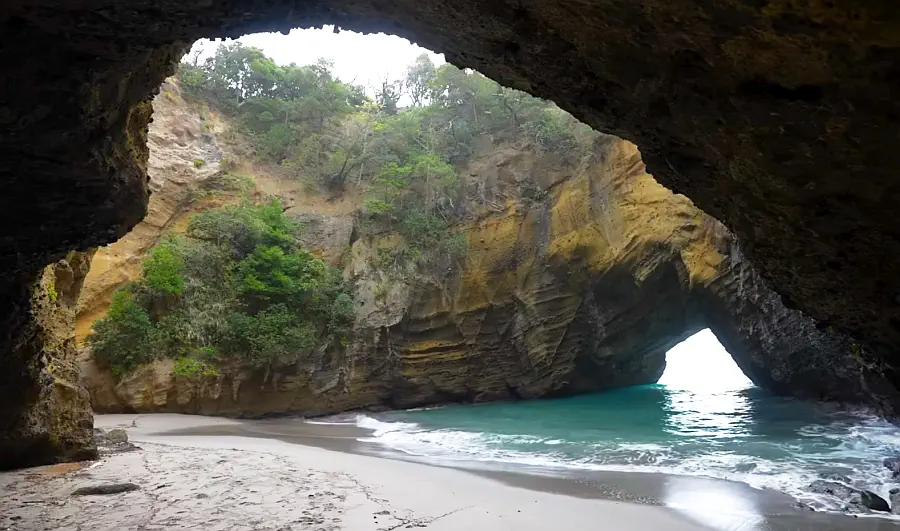
Next to the cave, a white sand slope drops to the beach. We spent the afternoon there, alternately watching waves roll into the cave mouth and watching sandboarders carve turns down the dunes. It was one of those rare beach days where the scenery feels genuinely otherworldly.
Kathryn took the wheel for the first time on the left side of the road during the Izu stretch — a nerve-wracking experience on the peninsula’s narrow coastal roads, where the Pacific drops away to your left and rock faces press in from the right. She handled it with more composure than she’ll probably admit.
What We Learned About Van Life in Japan
Six days into our road trip, and a few patterns had settled in. Mornings started early — first light in the mountains comes with a particular clarity that rewards early risers. We’d drive to the day’s destination, hike or explore, then hunt for a michi-no-eki or campsite by late afternoon.
Showering took some creative problem-solving. Our first attempt was a manga cafe — internet cafes with private booths, showers, and sometimes even nap pods. For about ¥1,500, you get access to a booth, a shower, and all the soft drinks you can drink. It’s not glamorous, but it works. The alternative was roadside onsen, which honestly felt more on-brand for a Japan trip.
The van itself was surprisingly comfortable. The bed folded out across the back, just long enough for two adults if you don’t mind being close. The kitchen — a single burner, a tiny sink, and a mini-fridge — handled simple meals. We cooked more than we expected: rice balls from convenience stores, instant ramen upgraded with whatever vegetables we’d picked up at a michi-no-eki market, and once, ambitiously, a stir-fry that set off every alarm in the van.
What surprised us most was how easy it all felt. Japan’s infrastructure for campervan travel is remarkably well developed — michi-no-eki every few hours, clean facilities everywhere, roads that are narrow but meticulously maintained. The Japanese concept of “resting” at a roadside station, rather than “camping,” shapes the whole experience. You’re not setting up camp. You’re pausing.
Practical Tips for Your Own Japan Campervan Trip
A few things we wish we’d known before setting out:
Book early for autumn. October is peak campervan season in Japan. We booked our van from Japan CRC three months ahead and still nearly missed out on our preferred dates. Campsites in the Hakuba and Kamikochi areas fill up fast for the foliage window.
Get the expressway pass. Regional passes exist for foreign visitors and can save you thousands of yen on tolls. Ask at your rental company — they’ll know which ones apply to your route.
Carry cash. Many michi-no-eki, rural restaurants, and small museums don’t accept cards. We kept about ¥20,000 in cash at all times and were glad of it.
Pack layers. Mountain weather in the Japanese Alps changes fast. We went from t-shirt weather at Kamikochi’s valley floor to needing a fleece and windbreaker on the Happo-ike trail in the same afternoon.
Learn the word “sumimasen.” It means “excuse me” and will solve approximately 80% of your interactions in rural Japan.
The remaining 20% can usually be handled with a bow and a grateful smile.
Two weeks in a mini campervan isn’t enough to see Japan — it’s barely enough to scratch the surface of one region. But it’s enough to fall in love with the idea. The mountains, the forest trails, the ancient post towns, the coast — they all feel more vivid when you’re arriving in a vehicle that forces you to slow down, to stop at roadside stations, to notice the small things. The tiny parking space. The perfectly placed vending machine. The old woman at the michi-no-eki who insisted on giving us three extra tomatoes because we looked like we could use them.
She was right. We could.
For city-based explorations before or after your road trip, discover Tokyo’s coolest neighbourhoods for vintage shopping and jazz bars.
Lukas Weber
Adventure Travel & Road Trip Specialist
Lukas is a Munich-based adventure specialist who grew up exploring the Bavarian Alps. With extensive cross-continent driving experience, he shares highly practical tips for van life, 4WD road trips, and remote camping expeditions.
Activities in japan
More stories from japan
Winter Magic in Nagano: A Train Journey to Nozawa Onsen
Experience the magic of winter in Nagano Prefecture. Journey by scenic local train to Nozawa Onsen, Japan's renowned hot spring village, and explore the enchanting Kamakura Snow Dome Village.
Tokyo's Coolest Neighbourhoods: Jazz, Vinyl, and Vintage Vibes
A deep dive into Nakameguro, Shimokitazawa, and Setagaya – the ultimate Tokyo tour for lovers of jazz cafes, vinyl bars, and hidden vintage gems.
Best tours for road_trips
More road trips
Wild Camping in the Norwegian Mountains: A Scenic Road Trip
Join a breathtaking road trip through the lush green fjords and majestic mountains of Norway. Experience the thrill of wild camping and a luxurious stay in the wilderness.

Remote Paradise: A Solo 4WD Journey to Cape Arid, Western Australia
A solo 4X4 adventure will take you alongside the pristine beaches of Cape Arid National Park. The unspoilt beauty of Western Australia's remote beaches will be yours to explore on this trip.

Switzerland Relaxing Alpine Drive: Interlaken to Grindelwald, Switzerland
Take a peaceful virtual ride on an AMG SL63 Mercedes-Benz through Switzerland's majestic Alps in 4K resolution.
Book your trip in asia
More from asia

Top 10 Magical Places to Visit in Cappadocia, Turkey
Discover the magic of Cappadocia, Turkey, a historical region with unique rock formations, cave churches, and unforgettable hot air balloon rides at sunrise.
Winter Magic in Nagano: A Train Journey to Nozawa Onsen
Experience the magic of winter in Nagano Prefecture. Journey by scenic local train to Nozawa Onsen, Japan's renowned hot spring village, and explore the enchanting Kamakura Snow Dome Village.
Tokyo's Coolest Neighbourhoods: Jazz, Vinyl, and Vintage Vibes
A deep dive into Nakameguro, Shimokitazawa, and Setagaya – the ultimate Tokyo tour for lovers of jazz cafes, vinyl bars, and hidden vintage gems.